The Station (1958)
one ticket, no return
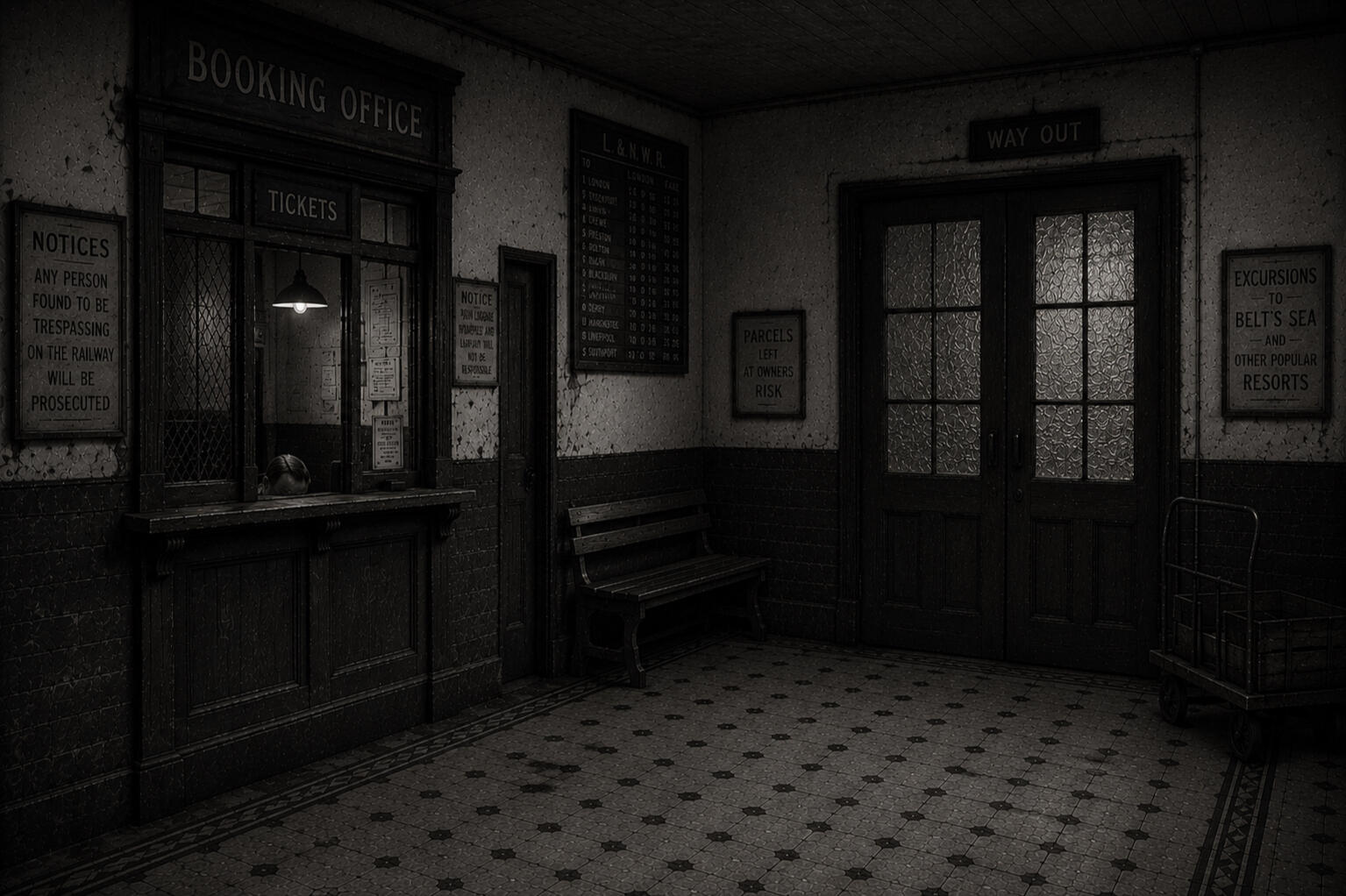
Released in 1958, The Station was one of Crimea Street Films’ earliest examinations of the quiet expectations placed upon young women. Set almost entirely within a small railway station, the production made striking use of its booking hall, waiting room and platforms, turning an ordinary provincial station into a place of possibility and escape.The story follows Margaret Ellis, a young booking clerk who spends her days selling tickets to places she has never seen. Unknown to her family and fiancé, Margaret has been quietly saving part of her wages and plans to leave for London on the final Saturday evening of the month.Although presented as a story about a young woman seeking a different life, The Station was less concerned with London than with the difficulty of leaving home. Its famously unresolved final scene, in which Margaret enters the booking hall carrying a suitcase as the London train approaches, divided audiences and remained the subject of debate for years afterwards.
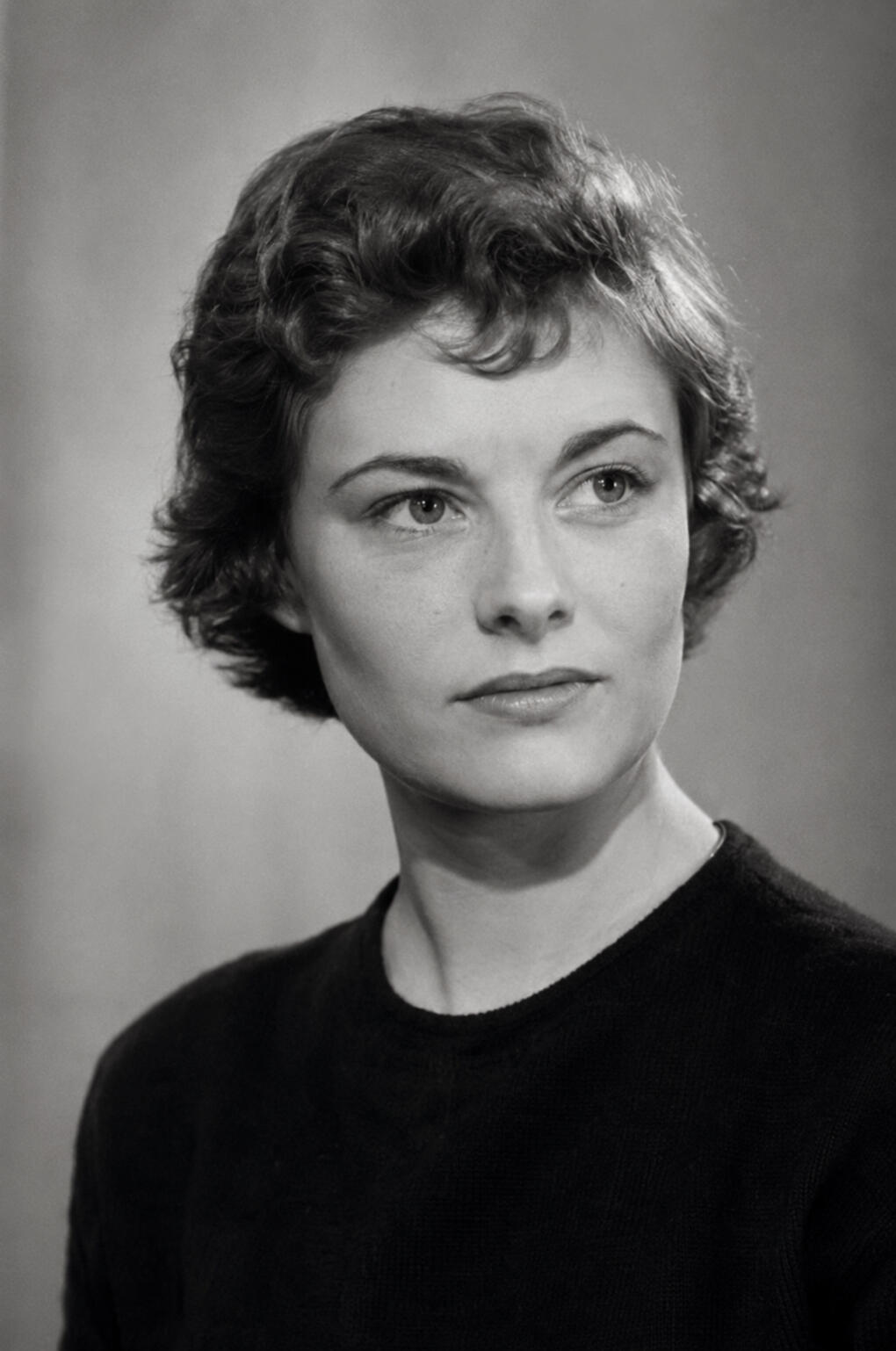
Marian Holt (1934–1959)Marian Holt was born in Accrington in 1934, the only daughter of an insurance clerk and a shop assistant. After leaving school at sixteen, she worked behind the counter of a local department store and became involved with an amateur dramatic society, initially helping with costumes before taking several small parts on stage.Holt had no formal acting training and had never seriously considered acting professionally. However, her quiet presence attracted attention during a production attended by Alistair Dunmore in 1957. Dunmore was particularly struck by her ability to remain completely still on stage without appearing self-conscious, a quality he believed would translate naturally to film.She was invited to audition for the part of Margaret Ellis in The Station. Although several more experienced actresses were considered, Dunmore felt that Holt possessed the uncertainty and restrained determination the role required. She was offered the part shortly before filming began in early 1958.Holt’s lack of experience occasionally caused difficulties during production, particularly when scenes required repeated takes. Nevertheless, director Edward Seddon recognised that excessive rehearsal weakened her performance and increasingly allowed scenes to continue with minimal preparation.Her portrayal of Margaret was praised for its naturalness, with several reviewers assuming that Holt had herself worked in a railway booking office. The unresolved final scene became closely associated with her expression as she listens to the approaching London train, carrying a suitcase but giving no indication of what she intends to do.Following the release of The Station, Holt returned briefly to amateur theatre while considering further film work. Crimea Street Films intended to offer her another role, although no formal agreement had been reached.In October 1959, Holt died suddenly at her parents’ home from an undiagnosed heart condition. She was twenty-five. Her death ended a career consisting of a single film performance and inevitably altered the way audiences viewed The Station.Although Marian Holt never had the opportunity to establish herself as a professional actress, her performance remains one of the most distinctive in the early Crimea Street archive. The uncertainty surrounding Margaret Ellis’s final decision has endured, while Holt herself remains forever captured at the beginning of a career that never followed.
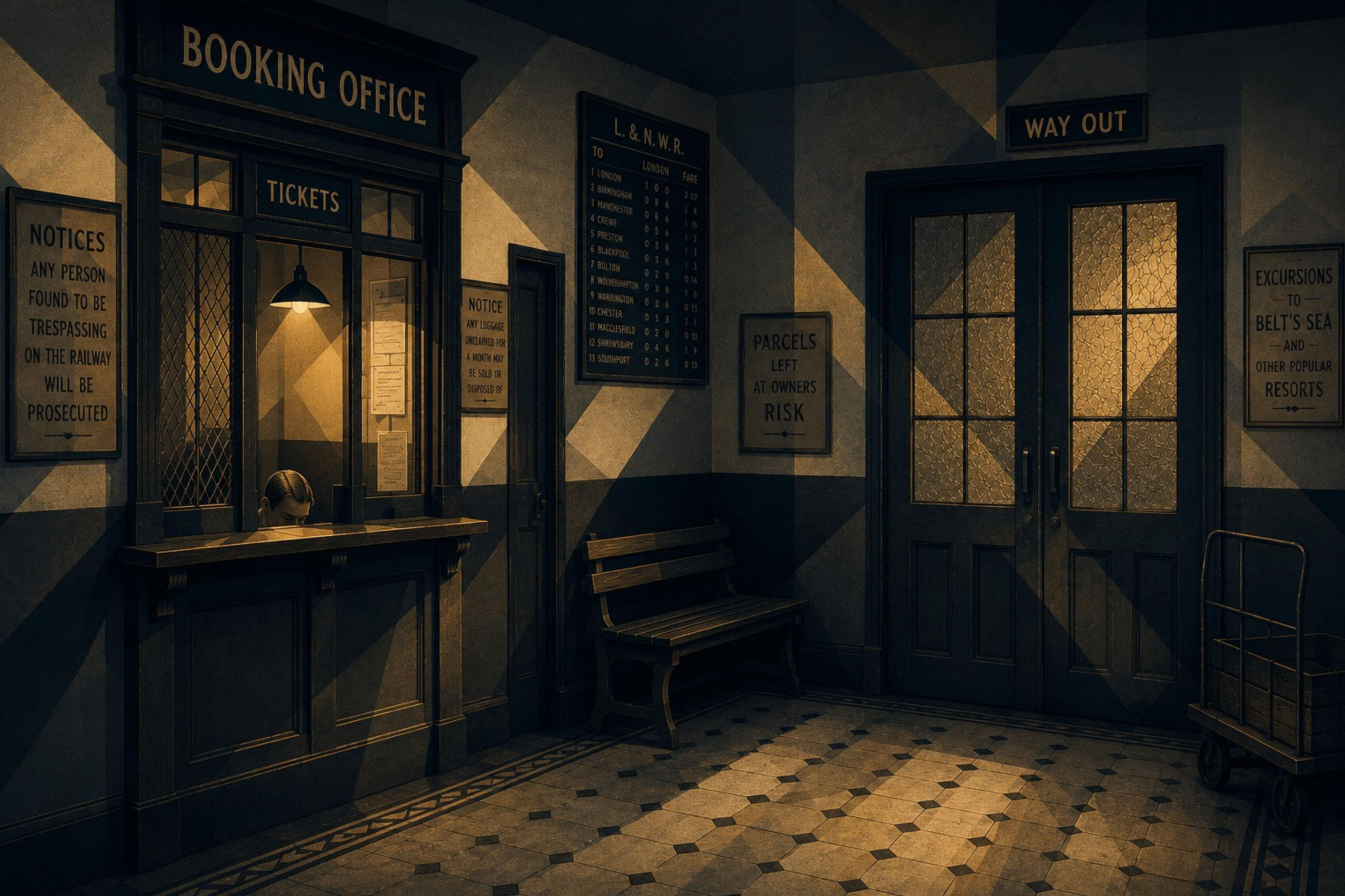
The Station (Northern Deco)The booking hall of The Station became the subject of Olive James’ distinctive reimagining, reducing its tiled floor, ticket office and heavy wooden doors to a series of bold geometric forms while retaining the subdued light and sense of expectation found in the original production.James later remarked that she was less interested in the journeys themselves than the quiet moment before somebody decides to leave.The result is a work that captures the station not as a place of arrival or departure, but as the point at which an ordinary life might change.Available exclusively through FCSF, this artistic interpretation is available unframed on 240 gsm art paper and measures 20 x 16 inches.
What did the critics think?
Upon release, The Station received a generally favourable response from critics.The Manchester Evening Chronicle observed:“Marian Holt gives a performance of remarkable restraint in a picture that finds considerable drama within one small booking hall.”Picturegoer was less convinced by the film’s unresolved conclusion:“Miss Holt impresses, although audiences may feel entitled to know whether she finally catches the train.”Kinematograph Weekly praised the production’s atmosphere, noting:“Edward Seddon makes effective use of the railway setting, allowing every whistle, closing door and approaching engine to carry a significance of its own.”Commercially, the film performed modestly. Although the ambiguous ending frustrated some audiences, The Station gradually became one of the most discussed of Crimea Street Films’ early productions.
From the archive
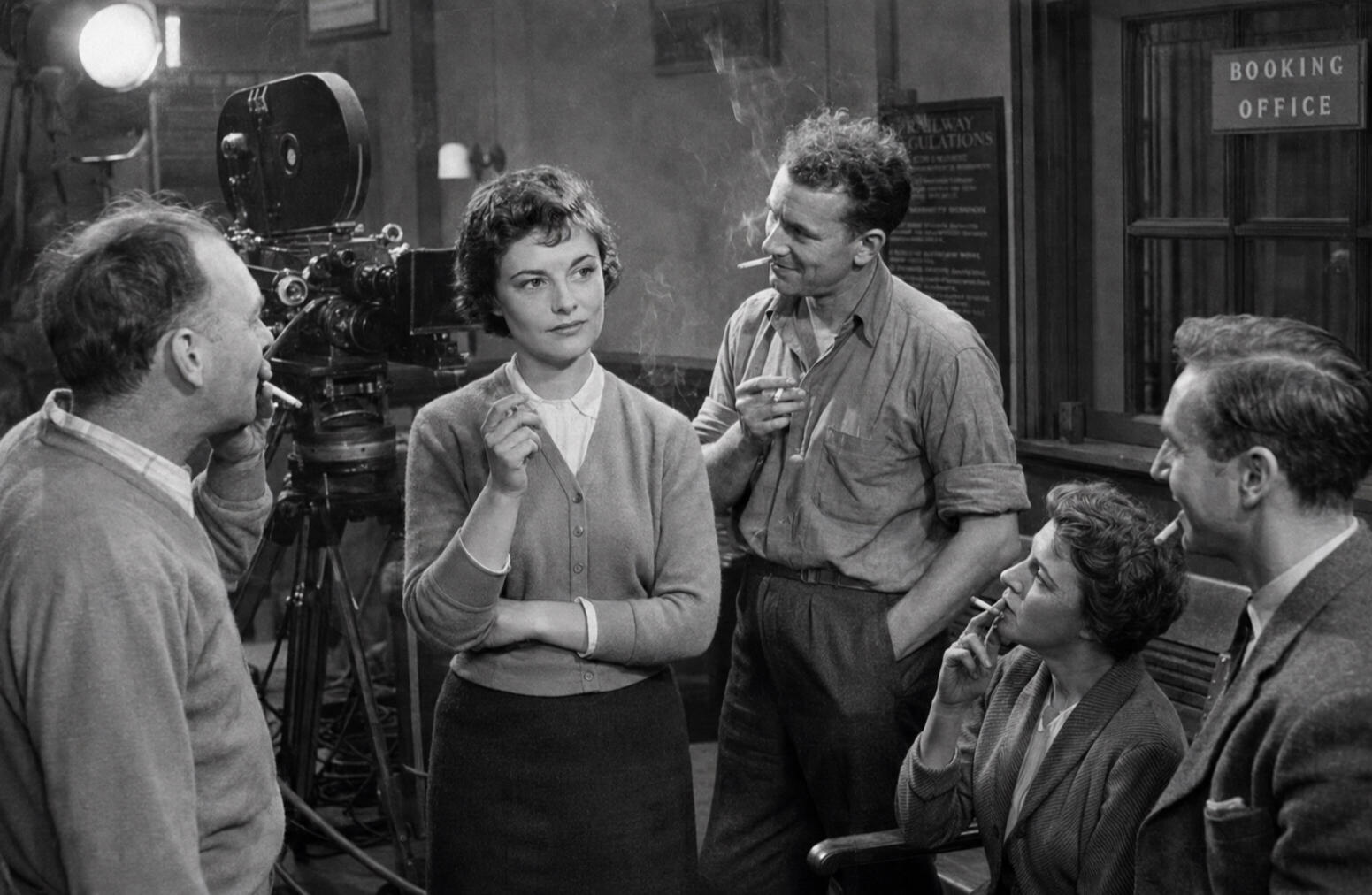
Among the surviving continuity notes for The Station is the following instruction:“Miss Holt has taken up smoking between takes. Please ensure she puts the cigarette out before entering the booking office.”
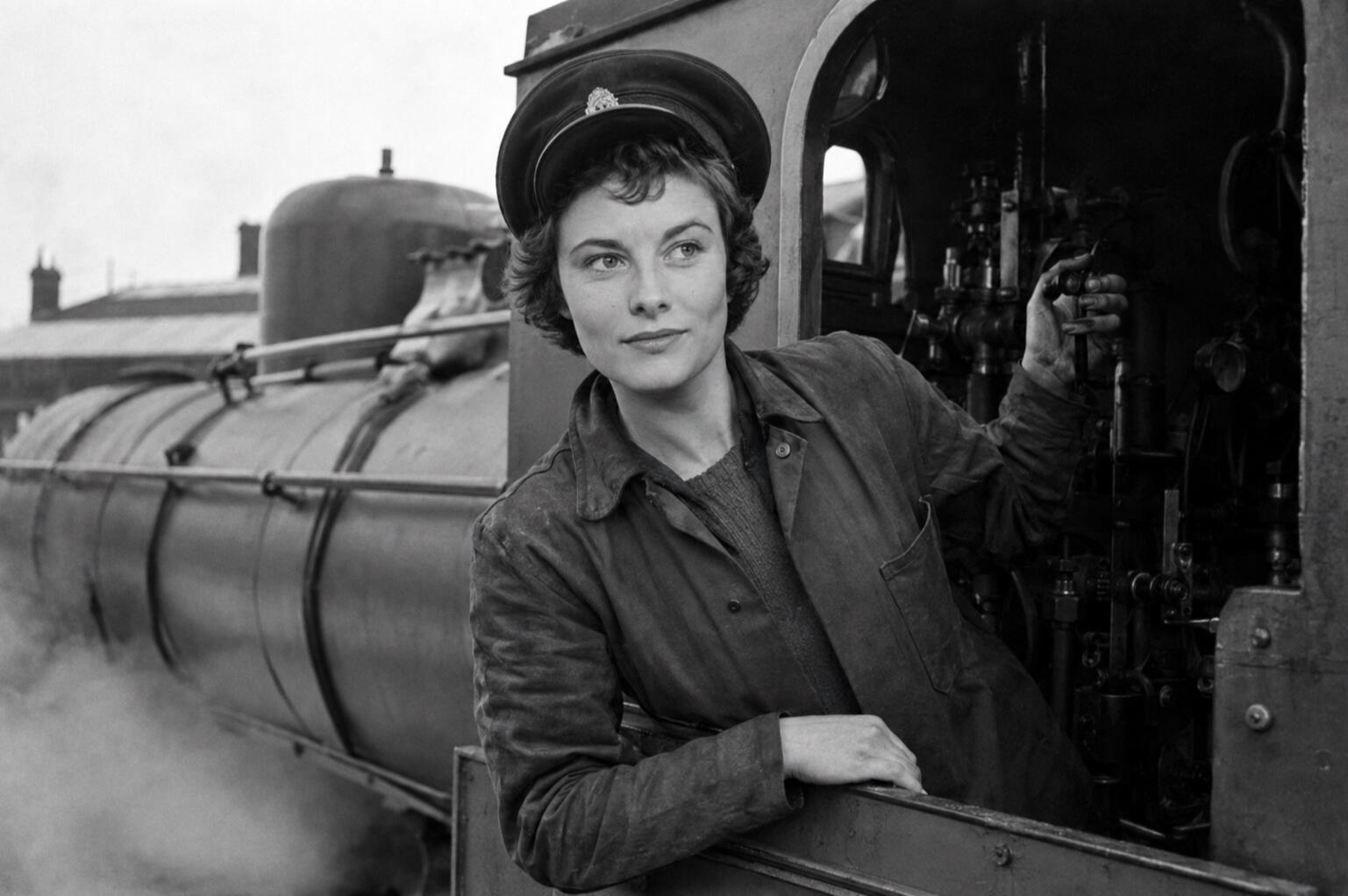
Publicity shot from the archive
The artwork of Reg Baines
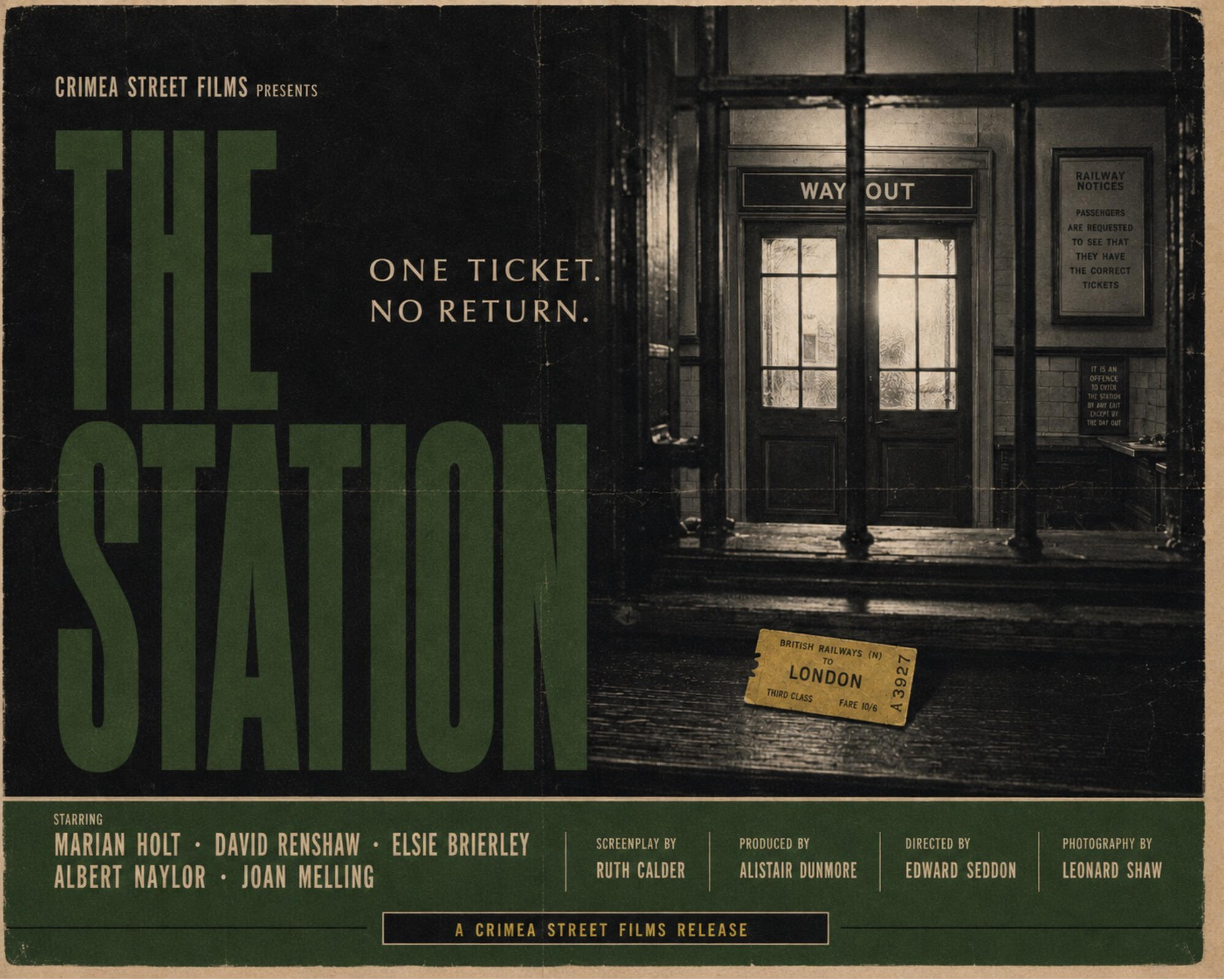
The original posters created by Reg Baines are synonymous with the studio and are very much part of its history.They would have been seen throughout the North of England outside cinemas, on hoardings and in places such as train stations.Most of them were damaged in a fire at the studio in late 1966, but we are delighted to now work with Parbold based artist, Brian Astley.He has faithfully reproduced each poster to a standard that our Reg would have been proud of and each one is available unframed on 240 gsm art paper as a 20 x 16 inch homage to the films we celebrate.
Further Exploration
Discover the other films we focus on this month and come back soon for a new collection.